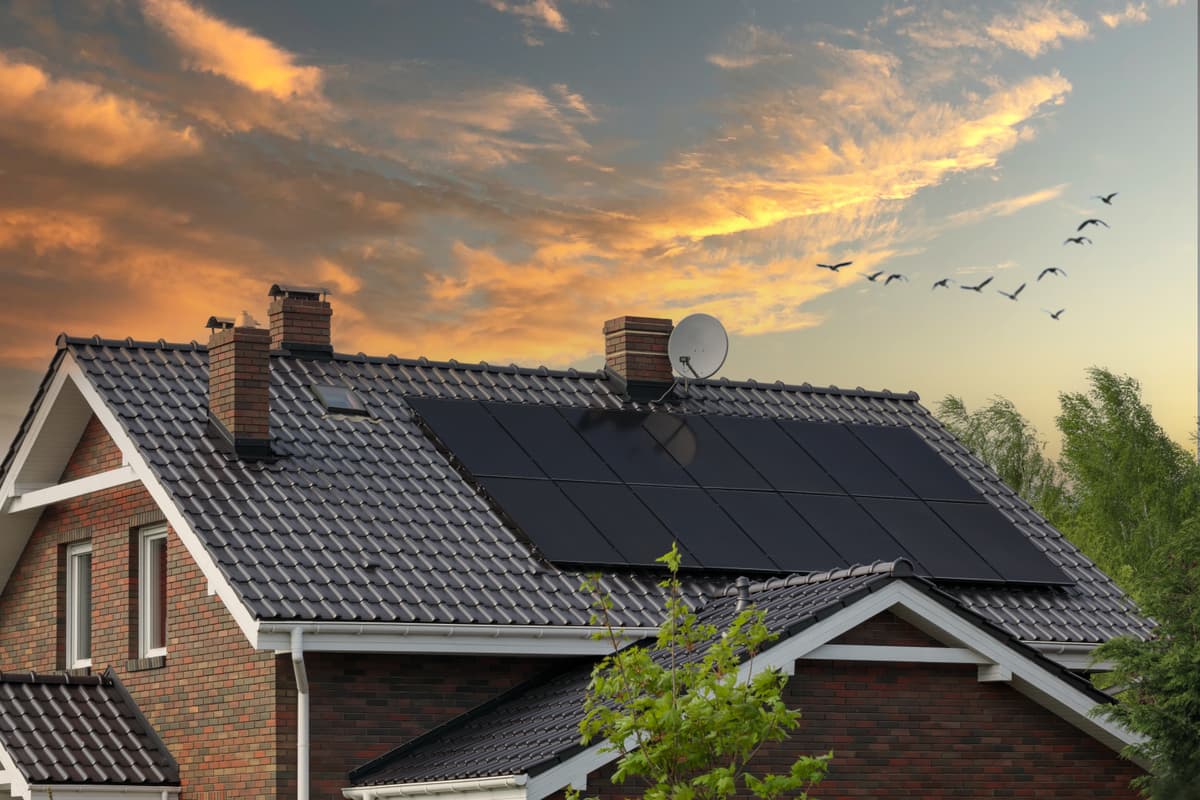

Why 2026 Is the Best Year to Go Solar in Florida
If you have been considering solar panels for your Florida home, 2026 is the strongest window in the history of the industry to make the switch. The 30% federal tax credit is still available, full retail net metering is intact, panel costs are at record lows, FPL and Duke Energy rates are at record highs, and battery technology has never been better or more affordable. Every month you wait is a month you pay premium utility rates you could be avoiding.
Key Takeaways
- The 30% federal Investment Tax Credit (ITC) saves Florida homeowners $6,000 to $10,500 on a typical installation, and it remains at the full 30% rate only through 2032 before stepping down to 26% in 2033 and 22% in 2034.
- Florida's full retail net metering policy is currently in effect but could change at any time --- once new rules take effect, the financial returns for solar homeowners could drop significantly.
- Solar panel efficiency is at an all-time high while costs are at an all-time low, meaning you get more production per dollar spent in 2026 than in any previous year.
- FPL and Duke Energy rates have increased 3% to 5% annually over the past decade, and every month without solar is another month paying rising rates with zero return on investment.
- Florida's sales tax and property tax exemptions for solar remain fully in effect, stacking on top of the federal credit to create one of the most generous incentive environments in the country.
Why Timing Matters More Than You Think
There is a common misconception among Florida homeowners that solar will always be there when they are ready. The panels will still exist next year. The tax credits will probably still be around. The utility rates will be roughly the same.
None of that is accurate. The reality is that the solar opportunity in Florida is shaped by a very specific set of conditions --- federal policy, state regulations, utility rate structures, equipment costs, and technology performance --- and right now, in 2026, every single one of those factors is aligned in the homeowner's favor.
That alignment will not last indefinitely. Several of these advantages are already on countdown timers. Others could change with a single regulatory decision or legislative session.
The question is not whether solar makes sense in Florida. The data settled that years ago. The question is whether it will ever make as much sense as it does right now. The answer, based on every available indicator, is no.
Here are six reasons why 2026 represents the peak window for going solar in Florida --- and why waiting carries a real, measurable cost.
Reason 1: The 30% Federal Tax Credit Is Still at Full Strength
The federal Investment Tax Credit (ITC) is the single largest financial incentive available to Florida solar homeowners. Under the Inflation Reduction Act of 2022, the ITC provides a dollar-for-dollar credit of 30% of your total solar installation cost --- including panels, inverters, batteries, wiring, labor, and permitting.
For a typical Florida system costing $28,000 to $35,000, that translates to $8,400 to $10,500 directly off your federal tax bill. This is not a deduction. It is a credit that reduces what you owe, dollar for dollar.
The Step-Down Is Coming
The 30% rate is locked in through December 31, 2032. After that, the schedule is clear and non-negotiable:
| Year | ITC Rate | Credit on $30,000 System |
|---|---|---|
| 2022 - 2032 | 30% | $9,000 |
| 2033 | 26% | $7,800 |
| 2034 | 22% | $6,600 |
| 2035+ | 0% (residential) | $0 |
That is a difference of $2,400 between 2032 and 2033 on a $30,000 system. And by 2035, the residential credit disappears entirely.
While 2032 may sound far away, federal tax policy has a history of changing before scheduled deadlines. Extensions are never guaranteed, and political landscapes shift. Locking in your 30% credit now eliminates that uncertainty entirely.
At RIV Solar, every customer receives a complete tax credit breakdown during their free consultation, showing exactly how the ITC applies to their specific system and tax situation.
Reason 2: Full Retail Net Metering Is Still in Place --- but the Clock Is Ticking
Net metering is the policy that allows solar homeowners to send excess electricity back to the grid and receive a credit on their utility bill at the full retail rate. In Florida, this means that every kilowatt-hour your panels produce but your home does not immediately use earns you the same credit as if you had purchased that power from FPL or Duke Energy.
This is enormously valuable. In most months, a properly sized solar system produces more electricity than the home consumes during daylight hours. Under full retail net metering, that surplus is not wasted --- it offsets your nighttime and evening usage, often bringing your electric bill close to zero.
Why This Could Change
Florida's net metering policy has survived multiple legislative challenges, most notably in 2022 when a bill to drastically reduce net metering credits passed the legislature before being vetoed by the governor. But the utility companies have not stopped pushing. FPL, Duke Energy, and other Florida utilities have consistently lobbied to restructure net metering in ways that would reduce the financial benefit for solar homeowners.
States like California already made this shift. When California moved from NEM 2.0 to NEM 3.0 in 2023, export rates dropped by roughly 75%. Solar still made financial sense, but the payback period lengthened significantly.
If Florida follows a similar path --- and there is strong reason to believe the utilities will continue pushing for it --- homeowners who already have solar under the current net metering rules are typically grandfathered in for a set period, often 20 years. That means going solar now locks in the current, more favorable rules for the life of your system.
Waiting until after a net metering policy change could cost Florida homeowners tens of thousands of dollars in reduced credits over the life of their system.
Reason 3: Solar Technology Is Better and Cheaper Than Ever
The solar industry in 2026 is fundamentally different from what it was even five years ago. Panel efficiency has increased, manufacturing costs have dropped, and the equipment available to residential homeowners today delivers significantly more value per dollar than anything previously on the market.
Higher Efficiency Panels
Modern residential solar panels commonly achieve 21% to 23% efficiency, with premium models exceeding 24%. Compare that to the 15% to 17% efficiency that was standard just a decade ago. Higher efficiency means fewer panels to produce the same amount of electricity, which reduces installation costs and opens up solar for homes with limited roof space.
Lower Cost Per Watt
The cost per watt of solar has dropped by more than 70% since 2010. In Florida, residential installations in 2026 typically range from $2.50 to $3.00 per watt before incentives --- a fraction of what homeowners paid just a few years ago.
This means the total cost of a system that offsets most or all of your electricity is lower than it has ever been, while the output of that system is higher than it has ever been. The math has never been this favorable.
Better Inverter Technology
Microinverters and power optimizers have become the standard for residential installations. These technologies maximize production at the individual panel level, reducing losses from shading, soiling, and panel mismatch. The result is 5% to 25% more energy production compared to older string inverter designs, depending on roof conditions.
At RIV Solar, we use only Tier-1 equipment with proven performance in Florida's heat, humidity, and storm conditions. Our in-house installation crews --- never subcontractors --- ensure every system is designed and installed to deliver maximum long-term production.
Reason 4: FPL and Duke Energy Rates Are at Record Highs and Still Climbing
This is the factor that makes the urgency real and personal. While incentives and technology create the opportunity, your rising electric bill is the reason it matters to your household budget right now.
The Rate Trajectory
Florida utility rates have increased an average of 3% to 5% per year over the past decade. FPL has pushed through multiple base rate increases, fuel cost adjustments, and storm recovery surcharges. Duke Energy Florida has followed a similar pattern.
Here is what that compounding effect looks like for a Florida homeowner currently paying $200 per month:
| Year | Monthly Bill (3% Increase) | Monthly Bill (5% Increase) |
|---|---|---|
| 2026 | $200 | $200 |
| 2031 | $232 | $255 |
| 2036 | $269 | $326 |
| 2041 | $311 | $416 |
| 2046 | $361 | $531 |
| 2051 | $419 | $677 |
At a conservative 3% annual increase, you will pay approximately $87,000 to your utility company over the next 25 years. At 5% annual growth, that figure exceeds $114,000. And every dollar of that is gone permanently. You own nothing in return.
Why Rates Will Keep Rising
Florida's utility rate increases are driven by structural forces that are not going away:
- Grid infrastructure aging requires billions in upgrades, and utilities pass those costs to ratepayers.
- Hurricane hardening programs add surcharges to your bill after every major storm season.
- Natural gas price volatility directly impacts your electricity cost, since Florida's grid is heavily dependent on gas-fired generation.
- Regulatory approval has historically favored utility rate increase requests through the Florida Public Service Commission.
When you go solar, you step off the rate escalator entirely. Your electricity cost becomes fixed on the day your system is installed. While your neighbors' bills climb year after year, yours stays the same --- or drops to near zero.
Reason 5: Florida's Solar Tax Exemptions Are Fully in Effect
Florida offers two powerful tax exemptions specifically for solar energy systems, and both are currently active with no expiration date on the horizon.
Sales Tax Exemption
Florida exempts solar energy systems from the state's 6% sales tax. On a $30,000 system, that saves you approximately $1,800 --- money you would owe on virtually any other major purchase in the state. This exemption applies to the equipment, installation, and related components.
Property Tax Exemption
Solar panels increase your home's market value --- studies consistently show an increase of $15,000 to $20,000 or more for a typical residential system. In most states, that increased value would raise your property taxes. Florida is different.
Under Florida Statute 193.624, the added value from a solar energy system is 100% exempt from property tax assessment. Your home becomes more valuable, but your property tax bill does not increase by a single dollar.
The Combined Incentive Stack
When you combine the 30% federal ITC, the state sales tax exemption, and the property tax exemption, Florida offers one of the most generous solar incentive environments in the entire country. Here is what it looks like on a $30,000 system:
| Incentive | Savings |
|---|---|
| 30% Federal ITC | $9,000 |
| FL Sales Tax Exemption (6%) | $1,800 |
| FL Property Tax Exemption | Ongoing (no added tax on $15K-$20K+ value increase) |
| Total Immediate Savings | $10,800 |
Your effective out-of-pocket cost on a $30,000 system drops to approximately $19,200 --- and that is before accounting for the monthly savings on your electric bill that begin from day one.
Reason 6: Battery Storage Has Matured --- Better Performance, Lower Cost
For years, the knock on home battery storage was that it was too expensive to justify for most homeowners. That has changed. Battery technology in 2026 has reached a tipping point where performance, reliability, and cost all make sense for the average Florida household.
Why Batteries Matter in Florida
Florida's hurricane season is not theoretical. It is an annual reality that brings extended power outages to hundreds of thousands of homes. A solar-plus-battery system keeps your lights on, your refrigerator running, your medical equipment powered, and your family safe when the grid goes down.
Beyond storm protection, batteries allow you to:
- Store excess solar production for use during evening hours when your panels are not generating.
- Hedge against future net metering changes by reducing your reliance on grid credits.
- Maximize self-consumption of the electricity your panels produce, keeping more value in your home.
Battery Costs Have Dropped Significantly
Battery prices have fallen more than 40% over the past five years. A system like the Tesla Powerwall, Enphase IQ Battery, or Franklin WH now costs $10,000 to $18,000 installed --- and that cost also qualifies for the 30% federal ITC, bringing the effective price down to $7,000 to $12,600.
For Florida homeowners, pairing solar with battery storage in 2026 delivers the best combination of financial return, energy independence, and storm resilience the market has ever offered.
At RIV Solar, we design every battery system around your home's specific needs --- prioritizing the circuits that matter most to your family, whether that is your AC system, refrigerator, medical equipment, or home office.
The Real Cost of Waiting
Every argument for going solar in 2026 is also an argument against waiting. The cost of delay is not hypothetical --- it is measurable.
What One Year of Waiting Costs You
Assume you are a Florida homeowner paying $200 per month to FPL or Duke Energy:
- 12 months of utility payments: $2,400 paid to your utility with zero return
- Rate increases: If rates rise 4% this year, you start next year at $208 per month --- a higher baseline that compounds for the next 25 years
- One year closer to ITC step-down: Less runway to plan, install, and claim the full 30% credit
- One year closer to potential net metering changes: Every legislative session brings new risk
- Lost home equity: 12 months without the $15,000 to $20,000 increase in property value that solar provides
The math is straightforward. Every month without solar is a month you are paying premium utility rates that could be avoided, missing out on incentives that may not last, and losing equity you could be building.
How to Start Today
Going solar in Florida does not require a large upfront investment. At RIV Solar, we offer $0-down financing that allows most homeowners to replace their current electric bill with a lower monthly solar payment from day one.
Here is what the process looks like:
Step 1: Free Consultation
Contact our team for a no-pressure consultation. We analyze your electricity usage, roof characteristics, and financial goals to determine if solar is the right fit --- and to design a system sized specifically for your home.
Step 2: Custom System Design
Our engineers design your system using satellite imagery, shade analysis, and your actual utility data. You see exactly how many panels you need, where they go, how much energy they produce, and what your savings look like --- before you commit to anything.
Step 3: Permitting and Installation
RIV Solar handles all permitting, utility interconnection paperwork, and HOA communications. Our in-house installation crews --- never subcontractors --- complete most installations in one to two days.
Step 4: Activation and Savings
Once your system passes inspection and your utility approves interconnection, your panels go live. From that moment forward, your electricity is produced by your own roof. Your utility bill drops, your home value increases, and your energy future is in your hands.
Why RIV Solar
- $0-down financing with payments lower than your current electric bill
- 25-year all-inclusive warranty covering panels, inverters, batteries, and workmanship
- In-house crews --- every installation is done by our own trained technicians, never outsourced
- Bilingual team ready to serve you in English or Spanish
- Transparent pricing with no hidden fees, no bait-and-switch tactics, and no high-pressure sales
Ready to see what solar can save you? Get your free quote from RIV Solar today.
Frequently Asked Questions
Is 2026 really the best year to go solar in Florida?
Yes. The combination of the full 30% federal tax credit, current net metering rules, record-low panel costs, record-high utility rates, and mature battery technology creates the strongest financial case for going solar that Florida homeowners have ever seen. Several of these factors are on countdown timers, making 2026 the optimal window.
How much does it cost to go solar in Florida in 2026?
A typical 8 to 12 kW residential solar system in Florida costs $20,000 to $35,000 before incentives. After applying the 30% federal tax credit and Florida's sales tax exemption, most homeowners pay $14,000 to $24,500 out of pocket. With $0-down financing from RIV Solar, many homeowners start saving from month one with no upfront cost.
Will the federal solar tax credit really go away?
The 30% rate is legislatively locked in through 2032. After that, it drops to 26% in 2033, 22% in 2034, and expires for residential systems in 2035. While future legislation could extend it, there is no guarantee. The safest strategy is to claim the full 30% while it is available.
What happens to my solar investment if Florida changes net metering?
Homeowners who go solar under the current net metering policy are typically grandfathered into the existing rules for 20 years. This means installing now locks in the favorable full retail credit rate, even if the policy changes for future solar customers. Waiting until after a policy change means you would be subject to the new, likely less favorable, rules.
Can I go solar with no money down in Florida?
Yes. RIV Solar offers $0-down financing options that allow Florida homeowners to go solar with no upfront cost. In many cases, the monthly solar payment is lower than what you are currently paying FPL or Duke Energy, meaning you start saving from day one while building equity in a system you own.