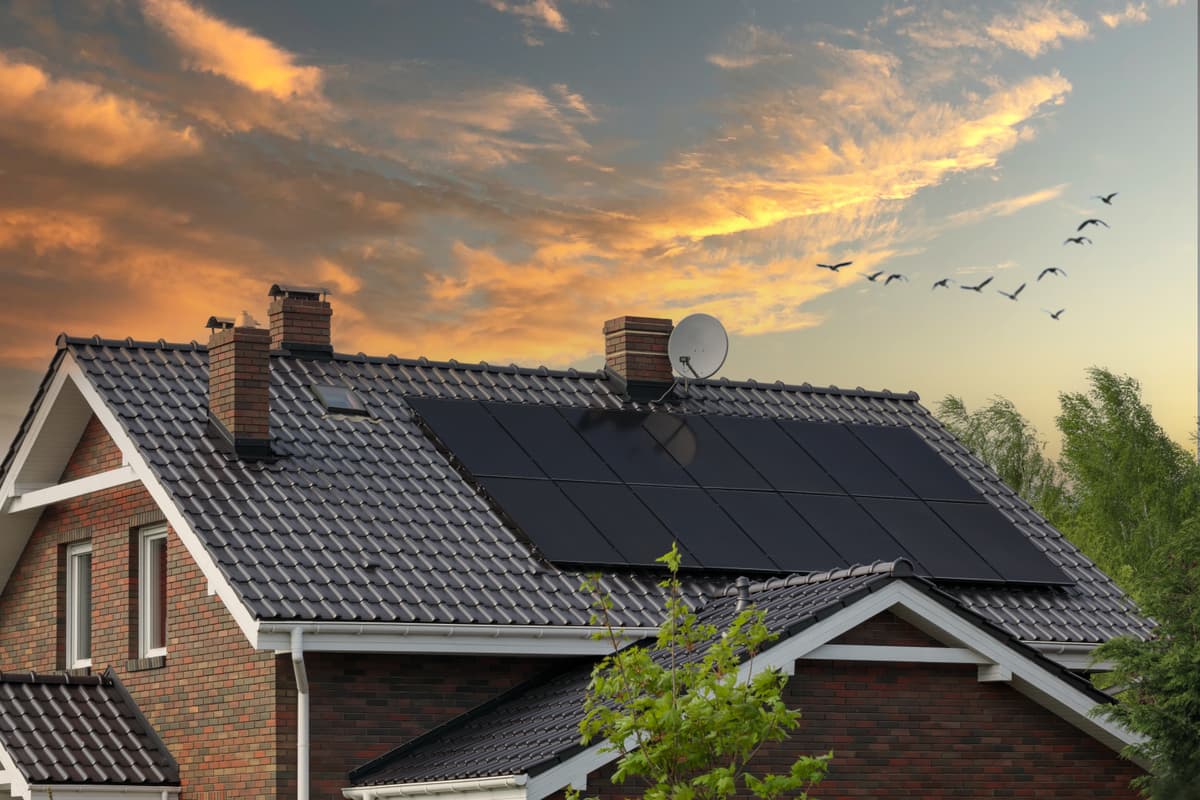

FPL Rates Keep Rising: Here's Your Exit Strategy
FPL has raised electricity rates repeatedly over the past decade, and further increases are approved through 2026 and beyond. Florida homeowners paying $150 to $250 per month face a projected $60,000 to $100,000+ in utility costs over 25 years. Solar energy is the only proven exit strategy — it locks in your energy cost on day one, eliminates rate hike exposure, and puts you in control of where your money goes.
Key Takeaways
- FPL rates have increased 3% to 5% annually over the past decade, with additional base rate hikes, fuel surcharges, and storm recovery fees approved through 2026 and beyond — and there is no regulatory mechanism to stop future increases.
- A Florida homeowner paying $200 per month today will pay $87,000 to $114,000+ over 25 years once compounding rate increases are factored in, with zero equity or return on that spending.
- Solar panels lock in your energy cost on installation day, effectively freezing your rate while FPL customers continue riding the escalator of annual increases.
- Florida's solar incentives — the 30% federal tax credit, sales tax exemption, property tax exemption, and full retail net metering — make the exit strategy more affordable than ever.
- Adding battery storage to your solar system creates true energy independence, keeping your home running during outages and eliminating the last thread tying you to utility rate volatility.
A Brief History of FPL Rate Increases
To understand why an exit strategy is necessary, you first need to understand the pattern. FPL rate increases are not random events. They are a structural feature of how Florida's electricity market works.
The Last Decade of Rate Hikes
FPL — Florida Power and Light, the state's largest utility serving more than 5.8 million accounts — has pushed through a steady stream of rate increases over the past ten years. These include:
- Base rate increases approved by the Florida Public Service Commission, which raised the cost of electricity generation and delivery infrastructure.
- Fuel cost adjustments that fluctuate with the price of natural gas, which generates approximately 74% of FPL's electricity.
- Storm recovery surcharges added to every bill after major hurricanes, spreading the cost of grid rebuilding across millions of ratepayers for years after each event.
- Grid modernization and solar base rate adjustments that fund utility-scale projects — projects that benefit FPL's balance sheet but increase your monthly bill.
Between 2022 and 2025 alone, FPL secured approval for one of its largest rate increases in company history, adding billions of dollars in revenue that came directly from residential customer bills. The average residential bill increased by roughly 15% to 20% in that period when all surcharges were combined.
The Regulatory Reality
Here is the part most Florida homeowners do not realize: the Florida Public Service Commission, which approves or denies utility rate requests, has historically approved the vast majority of FPL's increase proposals. The commission's stated mission includes ensuring reliable service and fair returns for utilities — which, in practice, means that when FPL says it needs more revenue, it almost always gets it.
There is no cap on how high rates can go. There is no consumer protection mechanism that freezes your bill at a certain level. The only question is how much and how fast.
Why FPL Rates Will Keep Climbing
Understanding the drivers behind rate increases is critical because it reveals something important: these are not temporary market conditions. They are long-term structural forces that will continue pushing rates higher for decades.
Natural Gas Dependency
Florida generates roughly 74% of its electricity from natural gas. That makes your FPL bill directly tied to the global natural gas market — a market shaped by geopolitical tensions, supply chain disruptions, extreme weather events, and export demand. When natural gas prices spike, FPL passes those costs to you through fuel adjustment charges, sometimes within months.
You have zero influence over the global natural gas market. But every price fluctuation shows up on your bill.
Infrastructure and Grid Modernization
FPL is in the middle of a multi-billion-dollar grid modernization program. This includes upgrading aging transmission lines, installing smart grid technology, and hardening infrastructure against hurricanes. These are legitimate investments, but the cost is not absorbed by FPL's shareholders. It is passed directly to you, the ratepayer, through base rate increases that take effect over multiple years.
Hurricane Recovery Costs
Florida is the most hurricane-exposed state in the country. After every major storm, FPL files with the Public Service Commission to recover billions in grid repair costs through multi-year surcharges. After the 2004-2005 hurricane seasons, customers paid storm surcharges for years. After Hurricane Irma in 2017, the cycle repeated. After Hurricane Ian in 2022, it happened again.
Every hurricane season is a potential rate increase event. And climate science indicates that storm frequency and intensity are trending upward in the Atlantic basin.
Growing Demand
Florida's population continues to grow rapidly, adding hundreds of thousands of new residents each year. More people means more demand on the grid, which means more infrastructure investment, which means more rate increases. Population growth is a rate increase accelerator that has no off switch.
What This Means for Your Wallet: 5, 10, and 25-Year Projections
Let us move from the abstract to the concrete. Here is what FPL's rate trajectory means for a Florida homeowner currently paying $200 per month, using conservative and moderate rate increase assumptions.
At 3% Annual Increases (Conservative Estimate)
| Timeframe | Monthly Bill | Annual Cost | Cumulative Total Paid |
|---|---|---|---|
| Today | $200 | $2,400 | $0 |
| Year 5 | $232 | $2,784 | $12,758 |
| Year 10 | $269 | $3,228 | $27,567 |
| Year 15 | $311 | $3,732 | $45,363 |
| Year 20 | $361 | $4,332 | $64,508 |
| Year 25 | $419 | $5,028 | $87,241 |
At just 3% annual growth, your $200 monthly bill becomes $419 per month in 25 years. Your total paid to FPL: approximately $87,000. And you own nothing for it.
At 5% Annual Increases (Moderate Estimate)
| Timeframe | Monthly Bill | Annual Cost | Cumulative Total Paid |
|---|---|---|---|
| Today | $200 | $2,400 | $0 |
| Year 5 | $255 | $3,060 | $13,264 |
| Year 10 | $326 | $3,912 | $30,156 |
| Year 15 | $416 | $4,992 | $52,654 |
| Year 20 | $531 | $6,372 | $82,676 |
| Year 25 | $677 | $8,124 | $114,550 |
At 5% annual growth — which aligns with actual FPL rate history during volatile periods — your bill reaches $677 per month and your 25-year total exceeds $114,000.
The Bottom Line
Whether rates grow at 3% or 5%, the result is the same: you spend tens of thousands of dollars more than you are spending today, you have no ability to control the increases, and you accumulate zero equity or asset value from any of it.
This is not a bill. It is a wealth transfer. And it only stops when you decide to exit.
The Solar Exit Strategy: How It Works
An exit strategy, in any context, means taking deliberate action to remove yourself from a situation that is working against you. In the energy context, your exit strategy is solar.
Here is why it works.
Solar Locks In Your Energy Cost
When you install a solar panel system on your Florida home, you are replacing a variable, uncontrollable expense — your FPL bill — with a fixed, predictable cost that you control.
If you finance your system with a $0-down solar loan, your monthly payment is locked in for the life of the loan. It does not increase. It does not fluctuate with natural gas prices. It does not spike after a hurricane. It is the same number, month after month, while your neighbors' FPL bills continue climbing.
If you purchase your system outright or pay off your loan early, your ongoing energy cost drops to nearly zero. The sun does not send an invoice.
The Math of Locking In
Consider a homeowner currently paying $200 per month to FPL who goes solar with a monthly loan payment of $150. In year one, they save $50 per month. But by year ten, when their FPL-dependent neighbor is paying $269 to $326 per month, the solar homeowner is still paying $150. By year fifteen, the gap is even wider. And once the loan is paid off — typically in 12 to 20 years depending on the terms — the solar homeowner's energy cost drops to nearly $0 for the remaining life of the system.
Over 25 years, the difference between the solar path and the FPL path is $40,000 to $80,000 or more — money that stays in your household instead of funding FPL's next infrastructure project.
Net Metering: Your Financial Safety Net
Florida's current net metering policy is one of the most powerful financial tools available to solar homeowners, and it plays a critical role in your exit strategy.
How Net Metering Works
When your solar panels produce more electricity than your home is using — typically during the middle of the day when the sun is strongest — that excess energy flows back to the grid. Under Florida's full retail net metering, FPL credits your account at the full retail rate for every kilowatt-hour you export. Those credits offset the electricity you pull from the grid at night or during cloudy periods.
In practical terms, this means your solar system does not need to cover 100% of your usage at every moment of the day. It just needs to produce enough total energy over each billing cycle to offset your total consumption. The grid acts as a free battery, storing your credits during the day and returning them at night.
Why This Matters for Your Exit Strategy
Net metering effectively eliminates the need to oversize your solar system or install a battery just to achieve bill elimination. A properly designed system — sized to offset your annual consumption — can reduce your FPL bill to the minimum grid connection fee, which is typically $10 to $15 per month.
That is the difference between paying $200+ per month with annual increases, and paying $10 to $15 per month with no increases. For the next 25 years.
RIV Solar designs every system to maximize net metering value for Florida homeowners. Our team analyzes your actual usage patterns, roof orientation, and shading to ensure your system is sized precisely to offset your consumption and capture every available credit.
Battery Storage: From Exit Strategy to Energy Independence
Solar panels with net metering give you a financial exit from rising FPL rates. Adding a battery storage system gives you something even more powerful: complete energy independence.
What a Battery Does for Your Exit Strategy
A home battery — such as a Tesla Powerwall, Enphase IQ Battery, or Franklin WH system — stores excess solar energy during the day and deploys it when you need it most. This provides three critical advantages:
1. Blackout Protection When FPL's grid goes down during a hurricane, thunderstorm, or equipment failure, your battery keeps your home running. Lights stay on. Refrigerator stays cold. Air conditioning keeps running. Medical equipment stays powered. You are not dependent on FPL for anything.
2. Maximum Self-Consumption A battery allows you to use your own solar energy around the clock instead of relying on net metering credits. This gives you even greater control over your energy costs and reduces your dependence on utility policy decisions.
3. Future-Proofing Net metering policies can change. Several states have already reduced or eliminated full retail net metering. By adding a battery, you insulate your investment against potential policy changes, ensuring your exit strategy remains fully intact regardless of what regulators do.
The Independence Factor
There is a psychological component to battery storage that goes beyond the financial math. When you have solar panels and a battery, you are no longer a customer of FPL in any meaningful sense. You produce your own energy, store your own energy, and use your own energy. The utility becomes a backup, not a lifeline. That is genuine energy independence.
Real Savings: What Florida Homeowners Are Actually Experiencing
The exit strategy is not theoretical. Thousands of Florida homeowners have already made the switch, and the savings are tangible and measurable.
Typical Savings Scenarios
Scenario 1: Average Florida Household
- Previous FPL bill: $190/month
- Solar system size: 8 kW
- System cost after 30% ITC: ~$17,000
- Monthly solar payment ($0 down): ~$140/month
- Net monthly savings in year one: ~$50/month
- Monthly savings after loan payoff: ~$190/month
- 25-year total savings vs. staying on FPL: $45,000 to $65,000
Scenario 2: Larger Florida Home
- Previous FPL bill: $280/month
- Solar system size: 12 kW
- System cost after 30% ITC: ~$24,000
- Monthly solar payment ($0 down): ~$185/month
- Net monthly savings in year one: ~$95/month
- Monthly savings after loan payoff: ~$280/month
- 25-year total savings vs. staying on FPL: $65,000 to $90,000
These numbers are conservative. They assume modest rate increases and do not account for the $15,000 to $20,000 increase in home value that solar panels typically add to a Florida property — value that is 100% property tax exempt under Florida law.
The Incentives That Accelerate Your Exit
Florida solar incentives reduce the cost of your exit strategy significantly:
- 30% Federal Investment Tax Credit (ITC): Reduces your system cost by nearly a third. On a $35,000 system, that is $10,500 back as a dollar-for-dollar federal tax credit.
- Florida Sales Tax Exemption: You pay zero sales tax on your solar equipment and installation. On a system that costs $25,000 to $40,000 before incentives, that saves you $1,500 to $2,800 immediately.
- Florida Property Tax Exemption: Solar panels increase your home value by $15,000 to $20,000, and Florida exempts 100% of that added value from property taxes. You get the equity without the tax burden.
- Full Retail Net Metering: Every excess kilowatt-hour you produce is credited at the full retail rate, maximizing your financial return on every panel.
Combined, these incentives make the cost of going solar in Florida lower than it has ever been — while the cost of staying on FPL is higher than it has ever been.
Your Exit Plan: Step by Step
Ready to execute your exit strategy? Here is exactly how the process works with RIV Solar.
Step 1: Free Consultation and Bill Analysis
Contact RIV Solar for a no-obligation consultation. We review your current FPL bills, analyze your energy usage patterns, evaluate your roof, and design a system tailored to your specific situation. This is a conversation, not a sales pitch. We show you the numbers and let you decide.
Step 2: Custom System Design
Our engineering team designs a solar system sized to offset your FPL consumption, accounting for your roof orientation, shading, local weather patterns, and energy usage profile. Every system is custom — no cookie-cutter solutions.
Step 3: Financing and Incentive Capture
We walk you through your financing options, including $0-down solar loans that can match or beat your current FPL bill from day one. We also ensure you capture every available incentive — the 30% ITC, sales tax exemption, and property tax exemption — so your out-of-pocket cost is minimized.
Step 4: Permitting and Installation
RIV Solar handles all permitting and utility interconnection paperwork. Our in-house installation crews — no subcontractors — complete most residential installations in one to two days. We manage the entire process so you do not have to.
Step 5: Activation and Net Metering Enrollment
Once your system is installed and inspected, we coordinate with FPL to activate your net metering agreement. From that moment forward, your meter runs both ways, and every kilowatt-hour your panels produce starts reducing or eliminating your FPL bill.
Step 6: Exit Complete
Your energy cost is locked in. FPL can raise rates every year for the next quarter century, and it will not affect you. Your panels produce clean energy from your own roof, your system is protected by a 25-year warranty, and your money stays in your household.
That is the exit strategy, fully executed.
Why RIV Solar for Your Exit Strategy
Choosing to go solar is the strategic decision. Choosing the right installer is the tactical one. RIV Solar brings several advantages that matter for Florida homeowners:
- $0-Down Financing: No upfront cost required. Your solar payment can match or beat your current FPL bill from day one.
- In-House Installation Crews: We do not subcontract your roof to the lowest bidder. Our trained crews handle every installation.
- 25-Year Comprehensive Warranty: Panels, inverters, workmanship, and production — all covered for 25 years. If anything goes wrong, we fix it.
- Bilingual Team: Our team serves Florida's diverse communities in both English and Spanish, ensuring every homeowner understands their options completely.
- Transparent Process: No hidden fees, no bait-and-switch pricing, no high-pressure tactics. We show you the numbers, answer your questions, and let you make an informed decision.
Your exit from rising FPL rates starts with a single conversation. Contact RIV Solar today for your free consultation and take the first step toward locking in your energy cost for the next 25 years.
Frequently Asked Questions
How much have FPL rates increased over the past few years?
FPL rates have increased significantly between 2022 and 2025, with combined base rate adjustments, fuel surcharges, and storm recovery fees pushing residential bills up by approximately 15% to 20% over that period. Historically, FPL rates have risen 3% to 5% per year on average when all cost components are included, and additional increases are approved going forward.
Can solar really eliminate my FPL bill completely?
Yes. A properly sized solar system with net metering can reduce your FPL bill to the minimum grid connection fee, which is typically $10 to $15 per month. The system produces energy during the day, exports excess to the grid for full retail credits, and those credits offset your nighttime usage. Most Florida homeowners who go solar see 90% to 100% bill reduction.
What happens to my solar savings if FPL changes net metering rules?
Florida's current net metering law provides strong protections for residential solar customers. If you install solar under the current policy, you are typically grandfathered into those terms for a set period. Additionally, adding a battery storage system insulates you further by allowing you to store and use your own energy directly, reducing dependence on net metering credits regardless of future policy changes.
Is $0-down solar financing real, or is there a catch?
It is real. RIV Solar offers $0-down solar loans where your monthly payment can match or beat your current FPL bill from day one. You own the system, you receive the 30% federal tax credit, and your payment is fixed for the loan term — meaning it never increases, while FPL rates continue climbing. There are no hidden fees, no balloon payments, and no bait-and-switch terms.
How long does it take to go solar and start saving?
The entire process from initial consultation to system activation typically takes four to eight weeks. Installation itself is usually completed in one to two days by RIV Solar's in-house crews. Once your system is activated and your net metering agreement is in place with FPL, you start saving immediately on your very first billing cycle.