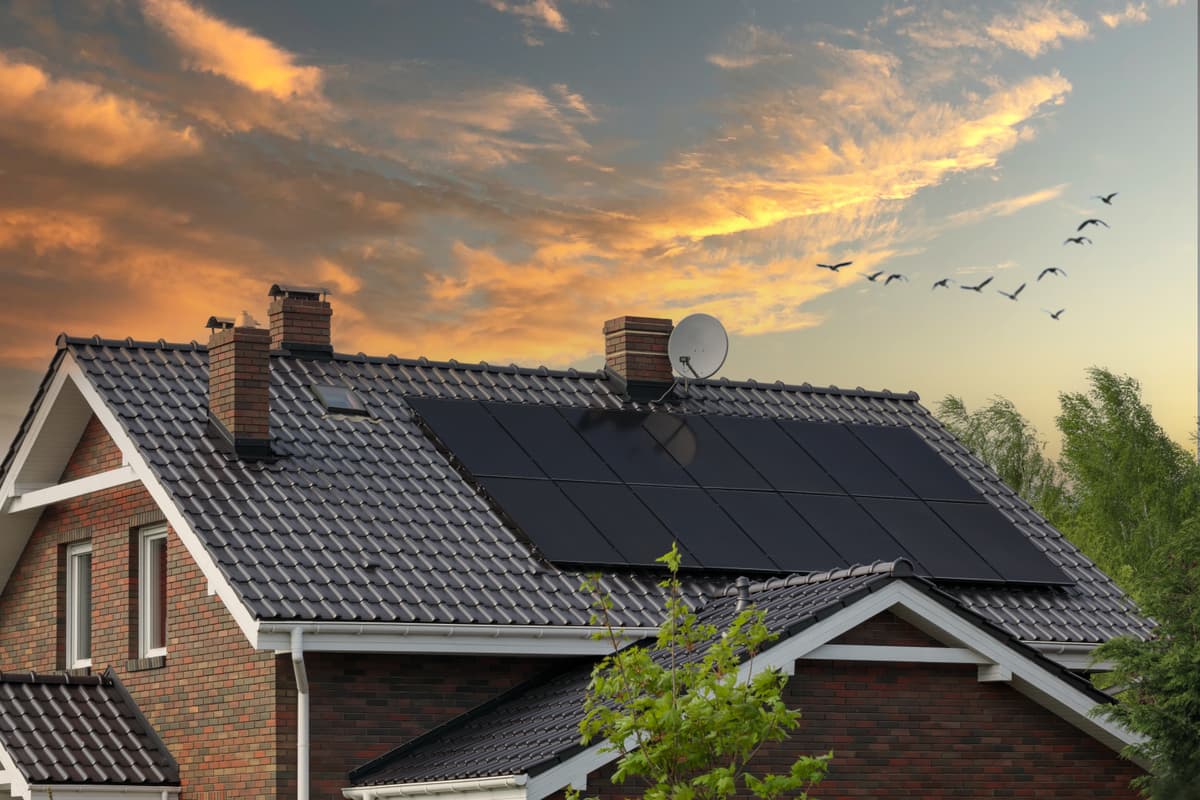

Is Solar Worth It in California in 2026? The Honest Answer
The short answer: Yes, solar is worth it for most California homeowners in 2026. With electricity rates hitting 45-55¢ per kWh (the highest in the continental US), a 30% federal tax credit still available, and 25-year warranties now standard, the math works out for the majority of households. However, solar isn't right for everyone—and we'll help you figure out if it's right for you.
Quick Summary: If your electric bill is over $150/month and you plan to stay in your home 5+ years, solar almost certainly makes financial sense. Typical savings: $100,000-150,000 over 25 years.
Real California Families, Real Results
Before we dive into the details, here's what actual California homeowners are experiencing:
The Martinez Family — Riverside, CA (SCE Customer)
"Our August bill used to hit $487. Last August with solar? $14. We're saving over $400/month during summer. I wish we'd done this years ago."
System: 9.2 kW with Tesla Powerwall | Monthly savings: $340 average
David & Patricia Chen — Temecula, CA (SDG&E Customer)
"SDG&E rates are insane—we were paying 58¢ per kWh at peak. Our solar payment is $189/month. Our old bill averaged $410. Do the math."
System: 10.5 kW | Monthly savings: $221
Marcus Thompson — Corona, CA (SCE Customer)
"I was skeptical. My neighbor had a bad experience with a different company. But our system has produced exactly what they promised for 18 months straight."
System: 7.8 kW | Payback period: 5.8 years
Why Solar Makes Sense in California in 2026
California has created the perfect storm for solar adoption:
1. Electricity Rates Are Out of Control
Let's look at the actual numbers as of January 2026:
| Utility | Rate per kWh | Average Monthly Bill | 10-Year Increase |
|---|---|---|---|
| SDG&E | 55¢ | $385 | +157% |
| PG&E | 45¢ | $315 | +114% |
| SCE | 42¢ | $294 | +105% |
| With Solar | ~18¢ effective | $12-20 | Locked |
What's driving these increases?
- Wildfire liability and prevention: $5-8 billion/year passed to ratepayers
- Infrastructure replacement: Aging grid built in the 1950s-70s
- Clean energy mandates: 100% clean electricity by 2045
- PSPS (planned blackout) management costs
The trajectory: PG&E has filed for another 8% increase for 2027. SDG&E is requesting 6.5%. These increases are approved almost automatically.
2. The 30% Federal Tax Credit Is Still Available
The Investment Tax Credit (ITC) lets you deduct 30% of your entire solar installation cost from your federal taxes.
Real example from a recent Inland Empire installation:
| Item | Cost |
|---|---|
| 8.5 kW solar system | $27,200 |
| Tesla Powerwall battery | $12,800 |
| Total system cost | $40,000 |
| 30% federal tax credit | -$12,000 |
| SGIP battery rebate | -$2,025 |
| Your net cost | $25,975 |
This credit is scheduled to drop to 26% in 2033 and 22% in 2034 before disappearing for residential customers. 2026 is still in the prime window.
3. Solar Technology Has Never Been Better
Modern Tier-1 panels from manufacturers like QCells, REC, and Silfab now offer:
| Feature | 2015 Panels | 2026 Panels |
|---|---|---|
| Efficiency | 15-17% | 21-23% |
| Warranty | 20 years | 25 years |
| Degradation rate | 0.7%/year | 0.25-0.4%/year |
| Shade tolerance | Poor | Excellent |
| Aesthetics | Visible grid lines | Sleek all-black |
Translation: Today's panels produce more power, last longer, and look better than ever.
4. Battery Storage Changes Everything
With Tesla Powerwall, Enphase, and Franklin batteries, you're no longer at the mercy of the grid.
Why batteries matter in California:
| Scenario | Without Battery | With Battery |
|---|---|---|
| PSPS blackout | Lights out (solar shuts off too) | Home runs normally |
| Peak rates (4-9 PM) | Pay 55-65¢/kWh | Use stored solar (free) |
| NEM 3.0 exports | Get 5-8¢ credit | Store for later use (worth 50¢+) |
PSPS impact: Over 3 million Californians were affected by planned blackouts in 2024-2025. In fire-prone areas of Riverside, San Bernardino, and San Diego counties, outages lasted 24-72 hours.
The Real Cost of Going Solar in 2026
Let's break down actual numbers for typical Inland Empire homes:
Example 1: Moderate Usage Home in Fontana
| Current Situation | Details |
|---|---|
| Home size | 1,800 sq ft |
| Monthly SCE bill | $265 |
| Annual usage | 8,200 kWh |
| Solar Solution | Details |
|---|---|
| System size | 6.5 kW (16 panels) |
| Gross cost | $22,750 |
| After 30% tax credit | $15,925 |
| Monthly payment (25-yr, 6.5%) | $109 |
| New electric bill | $12 |
| Monthly savings | $144 |
| Payback period | 6.2 years |
| 25-year savings | $58,000+ |
Example 2: Large Home with Pool in Murrieta (SDG&E)
| Current Situation | Details |
|---|---|
| Home size | 3,200 sq ft with pool |
| Monthly SDG&E bill | $520 |
| Annual usage | 14,500 kWh |
| Solar Solution | Details |
|---|---|
| System size | 11 kW + 2 Powerwalls |
| Gross cost | $52,000 |
| After tax credit + SGIP | $32,350 |
| Monthly payment (25-yr, 6.5%) | $221 |
| New electric bill | $15 |
| Monthly savings | $284 |
| Payback period | 5.1 years |
| 25-year savings | $112,000+ |
Example 3: Modest Home in San Bernardino
| Current Situation | Details |
|---|---|
| Home size | 1,400 sq ft |
| Monthly SCE bill | $185 |
| Annual usage | 6,000 kWh |
| Solar Solution | Details |
|---|---|
| System size | 5 kW (12 panels) |
| Gross cost | $17,500 |
| After 30% tax credit | $12,250 |
| Monthly payment (25-yr, 6.5%) | $84 |
| New electric bill | $12 |
| Monthly savings | $89 |
| Payback period | 7.1 years |
| 25-year savings | $42,000+ |
When Solar Might NOT Be Worth It
We believe in honesty. Solar isn't for everyone. It might not make sense if:
Your Electric Bill Is Under $100/Month
If you're barely using electricity, the savings won't justify the investment. The sweet spot is bills over $150/month.
However: If you're planning to buy an EV (adds $100-150/month to electric bill) or work from home (adds $30-75/month), factor in your future usage.
Your Roof Needs Replacement Within 5 Years
Solar panels last 25+ years—your roof should too. If your roof is 15-20+ years old with composition shingles, consider replacing it first.
Pro tip: Some installers offer roof + solar packages that can be more economical than doing them separately. Ask about this option.
You're Moving Within 2-3 Years
While solar increases home value by 4-6%, you might not recoup the full investment in a very quick sale.
The data: A Lawrence Berkeley National Lab study found California solar homes sell for an average of $15,000-$25,000 more than comparable non-solar homes. In the Inland Empire's competitive market, solar homes also sell faster.
Heavy Shading Issues
If large trees or buildings block your roof for most of the day, solar production drops significantly.
What counts as "too much shade"?
- Morning shade only (before 10 AM): Usually fine
- Afternoon shade only (after 4 PM): Usually fine
- Midday shade (10 AM - 3 PM): Significant impact
- All-day shade: Likely not viable
A site assessment will reveal if shading is a dealbreaker.
You Can't Use the Tax Credit
If you have very low federal tax liability (retired, low income), you can't fully benefit from the 30% credit. Leasing becomes relatively more attractive, though buying is still usually better if you can secure financing.
What About NEM 3.0?
California's new Net Energy Metering 3.0 policy (implemented April 2023) reduced the value of excess solar energy you send back to the grid.
The Old Way (NEM 2.0):
Export 1 kWh at noon → Get ~35¢ credit → Use that credit to buy 1 kWh at night
The New Way (NEM 3.0):
Export 1 kWh at noon → Get ~6¢ credit → Credit barely covers anything at night
Why Batteries Are Now Essential:
| Strategy | Value Under NEM 3.0 |
|---|---|
| Export 1 kWh to grid | 5-8¢ |
| Store 1 kWh, use at peak (4-9 PM) | 50-65¢ |
| Difference | ~10x more value |
Bottom line: NEM 3.0 didn't kill solar—it made batteries much more important. Solar + battery systems under NEM 3.0 often have BETTER economics than solar-only systems did under NEM 2.0.
California-Specific Incentives You Can Stack
Federal (Available Everywhere):
- 30% Investment Tax Credit — On solar AND batteries
California State:
- Property Tax Exemption — Solar doesn't increase your property taxes (saves ~$200-400/year)
- SGIP Battery Rebate — $150-1,000/kWh depending on eligibility
- SASH/DAC-SASH — Free solar for qualifying low-income homeowners
By Utility:
| Utility | Special Programs |
|---|---|
| SCE | Various TOU rate plans optimized for solar |
| SDG&E | Enhanced SGIP for high fire-threat districts |
| PG&E | PSPS-affected area battery incentives |
Equity-Eligible Rebates (Higher Incentives If You Qualify):
| Qualification | SGIP Rebate Level |
|---|---|
| General market | $150/kWh |
| Low-income (CARE/FERA) | $850/kWh |
| High fire-threat district | $850/kWh |
| Low-income + fire district | $1,000/kWh |
On a 13.5 kWh battery:
- General market rebate: $2,025
- Equity-eligible rebate: $11,475-$13,500
If you qualify for equity programs, batteries can be nearly free after incentives.
Key Takeaways
| Factor | Reality |
|---|---|
| California electricity rates | Highest in continental US, rising 7-9%/year |
| 30% federal tax credit | Available through 2032 |
| Typical payback | 5-8 years |
| 25-year savings | $50,000-150,000 depending on usage |
| NEM 3.0 impact | Batteries now essential for best economics |
| Best candidates | Bills over $150/month, staying 5+ years |
Frequently Asked Questions
How much does solar cost in California in 2026?
A typical residential system costs $22,000-$35,000 before incentives ($3.20-3.80/watt). After the 30% federal tax credit, expect $15,000-$24,500. With $0-down financing, monthly payments typically run $100-200—often less than your current electric bill.
How long do solar panels last?
Modern solar panels are warrantied for 25 years but typically last 30-35 years. They degrade slowly—about 0.3-0.5% per year—meaning after 25 years, they're still producing 85-90% of original capacity.
Will solar panels increase my home value?
Yes. Studies consistently show California solar homes sell for 4-6% more than comparable non-solar homes. In the Inland Empire, that can mean $20,000-$40,000 in added value on a typical home.
What happens during a power outage?
Without a battery, your solar system shuts off during outages (this is a safety requirement to protect utility workers). With a battery like Tesla Powerwall, your home runs on stored solar power while the grid is down.
Is the 30% tax credit really going away?
The 30% credit is locked in through December 31, 2032. It drops to 26% in 2033, 22% in 2034, and expires for residential customers after that.
Can I go solar with $0 down?
Yes. Loan options with $0 down are widely available. Monthly payments are often lower than your current electric bill—meaning you save money from day one without any upfront cost.
What's the difference between Tier 1 panels and cheap panels?
Tier 1 panels (QCells, REC, Silfab, Canadian Solar) come from established manufacturers with strong warranties and consistent quality. Budget panels may have shorter warranties, higher failure rates, and companies that may not exist in 10 years to honor claims.
Ready to See If Solar Is Worth It for You?
The fastest way to know is a free, no-pressure consultation. We'll analyze your actual utility bill—not generic estimates—and show you exactly what solar would look like for your home.
What you'll get:
- Bill analysis showing your current cost trajectory
- Custom system design for your roof
- Multiple financing options compared
- Realistic savings projections (not inflated promises)
What you won't get:
- High-pressure sales tactics
- "Sign today" discounts that disappear
- Pushy follow-up calls
Solar isn't for everyone. But for most California homeowners paying $150+ monthly to PG&E, SDG&E, or SCE, the math is hard to argue with.
[Get Your Free Solar Analysis] | [Try Our AI Bill Calculator]
Silva Bros Solar — Californians helping Californians go solar. Serving the Inland Empire, Riverside County, San Bernardino County, and surrounding areas.